Searching recalls…
Searching…
Searching…
Home › Nursery furniture › ONTHEWEI Baby Bath Seats
The notice says to stop using it — see below for what to do.
The recalled bath seats violate the mandatory standard for infant bath seats because they are unstable and can tip over while in use, posing a risk of serious injury or death due to drowning.
The Recall Registry rates this highest risk — Drowning risk.
Photos help. Identifiers decide. Appearance can vary by color, finish or packaging. Confirm the model number, date code or other identifier in the official notice.
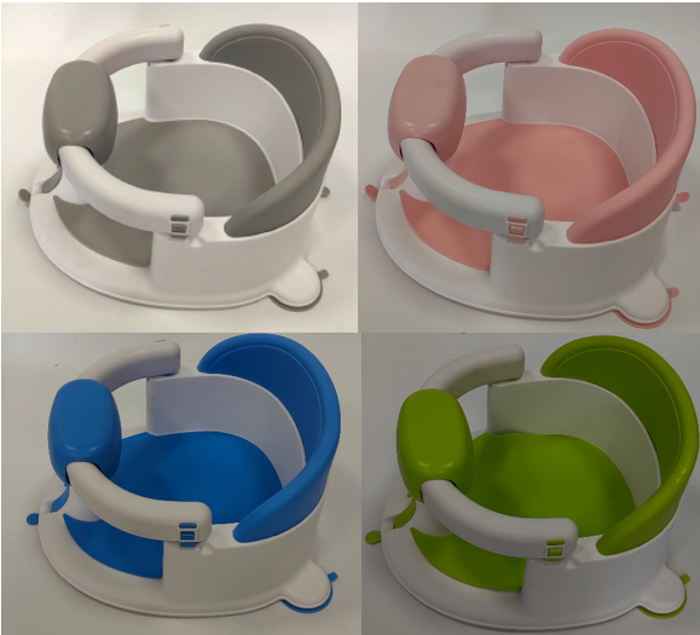
Recall image provided by CPSC
Consumers should stop using the recalled bath seats immediately and contact ONTHEWEI for a full refund. Consumers will be asked to destroy the bath seat by writing in permanent marker "RECALLED" on the front of the bath seat, disassembling it by removing the back rest and arm restraints and cutting the three suction cups on the seat's underside and send a photo of the destroyed bath seat showing the marked product to onthewei@outlook.com. Consumers should then dispose of the recalled product.
Who to contact: ONTHEWEI by email at onthewei@outlook.com
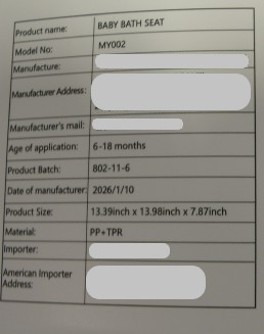
This recall involves ONTHEWEI-branded baby bath seats. They are sold in gray, pink, blue and mist green and have detachable restraint arms and suction cups on the underside. "Model No: MY002" and "Date of manufacturer: 2026/1/10" are printed on a label on the back of the bath seat.
Sold Online At: Amazon.com in April 2026 for between $40 and $50.
This recall was issued by the U.S. Consumer Product Safety Commission. The Recall Registry summarises it — always confirm the details at the source.
Their exact wording: “ONTHEWEI Recalls Baby Bath Seats Due to Risk of Serious Injury or Death to Children from Drowning; Violate Mandatory Standard for Infant Bath Seats”
Worried about the other things in your house? You can write down what you have and be told if one is recalled — or, if you sell second-hand, check your whole stock at once.
Filed under: Nursery furniture
The recalled dressers are unstable if they are not anchored to the wall, posing tip-over and entrapment hazards that can result in risks of serious…