Searching recalls…
Searching…
Searching…
Home › Furniture & furnishings › Chicago Century Furniture Corp. Mattresses for…
The notice says to stop using it — see below for what to do.
The mattresses fail to meet the mandatory federal open flame standard for mattresses, posing a fire hazard to consumers.
The Recall Registry rates this serious — Fire or burn risk.
Photos help. Identifiers decide. Appearance can vary by color, finish or packaging. Confirm the model number, date code or other identifier in the official notice.
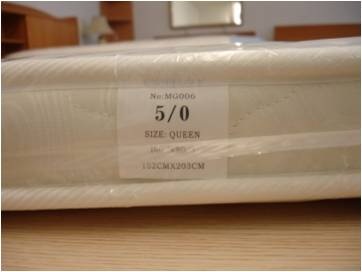
Recall image provided by CPSC
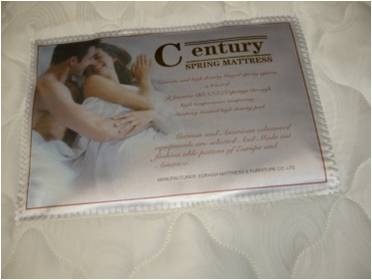
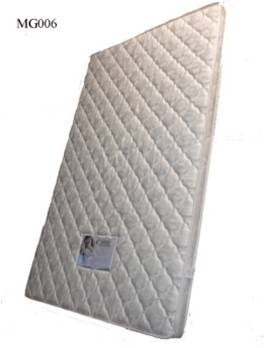
Consumers should immediately stop using the mattress and contact Chicago Century Furniture Corp. to receive a replacement mattress.
Who to contact: For additional information, contact Chicago Century Furniture toll-free at (855) 236-8830 between 9 a.m and 6 p.m. CT Monday through Friday. The firm is contacting its customers directly.
This recall involves Chicago Century Furniture Corp. twin-, full-, queen- and king-size mattresses with the model number "MG006." The mattresses are 3 inches thick with white and off-white fabric with a tone-on-tone swirl pattern. The model number can be found on a paper tag attached to the foot of the mattress. The words "Century Spring Mattress" appear on a fabric label on the topside near the foot of the mattress. A picture of a man and woman embracing also appear on the label.
Chicago Century Furniture Inc. 3034 South Wentworth Ave., Chicago, Ill., from January 2008 through October 2010 for between $190 and $360.
This recall was issued by the U.S. Consumer Product Safety Commission. The Recall Registry summarises it — always confirm the details at the source.
Their exact wording: “Chicago Century Furniture Corp. Recalls Mattresses for Violation of Federal Mattress Flammability Standard”
Worried about the other things in your house? You can write down what you have and be told if one is recalled — or, if you sell second-hand, check your whole stock at once.
Filed under: Furniture & furnishings
During assembly or disassembly, the frame of the wall bed can fall onto consumers, posing deadly impact, crush and laceration hazards.