Searching recalls…
Searching…
Searching…
Home › Furniture & furnishings › Baby Hammocks
The notice says to stop using it — see below for what to do.
The hammock can flip over, posing a serious fall hazard and strangulation hazard to infants who become entrapped in the seat's restraint straps while upside down.
The Recall Registry rates this highest risk — Strangulation risk.
Photos help. Identifiers decide. Appearance can vary by color, finish or packaging. Confirm the model number, date code or other identifier in the official notice.
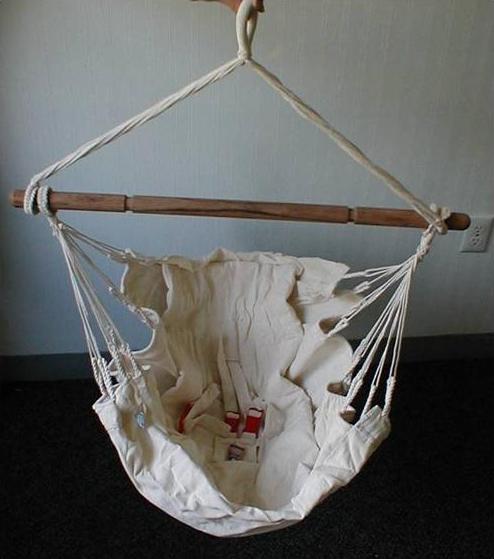
Recall image provided by CPSC
Consumers should immediately stop using the baby hammock and contact Kaplan to receive a full credit toward the purchase of another product. The firm has contacted all known purchasers of this product.
Who to contact: For additional information, contact Kaplan at (800) 334-2014 between 8 a.m. and 5 p.m. ET Monday through Friday, or visit the firm's Web site at www.kaplanco.com
The recalled baby hammock is a cream-colored canvas and hangs from a wooden pole. The hammock measures about 29 x 43 inches. It has three restraint straps with red buckles and is attached to a cushioned pad for the infant. A mounting fixture, also called a fixing set, is sold with the hammock. "La Siesta" is printed on a tag located below the restraint straps. Model number YABN-1 is printed on a white tag sewn into the hammock's side seam.
Kaplan's 2005-2007 Infant, Toddlers & Two (ITT) catalog and online at www.kaplanco.com from July 2005 through August 2008 for about $100.
This recall was issued by the U.S. Consumer Product Safety Commission. The Recall Registry summarises it — always confirm the details at the source.
Their exact wording: “Baby Hammocks Recalled by Kaplan Early Learning Due to Fall and Strangulation Hazards”
Worried about the other things in your house? You can write down what you have and be told if one is recalled — or, if you sell second-hand, check your whole stock at once.
Filed under: Furniture & furnishings
During assembly or disassembly, the frame of the wall bed can fall onto consumers, posing deadly impact, crush and laceration hazards.